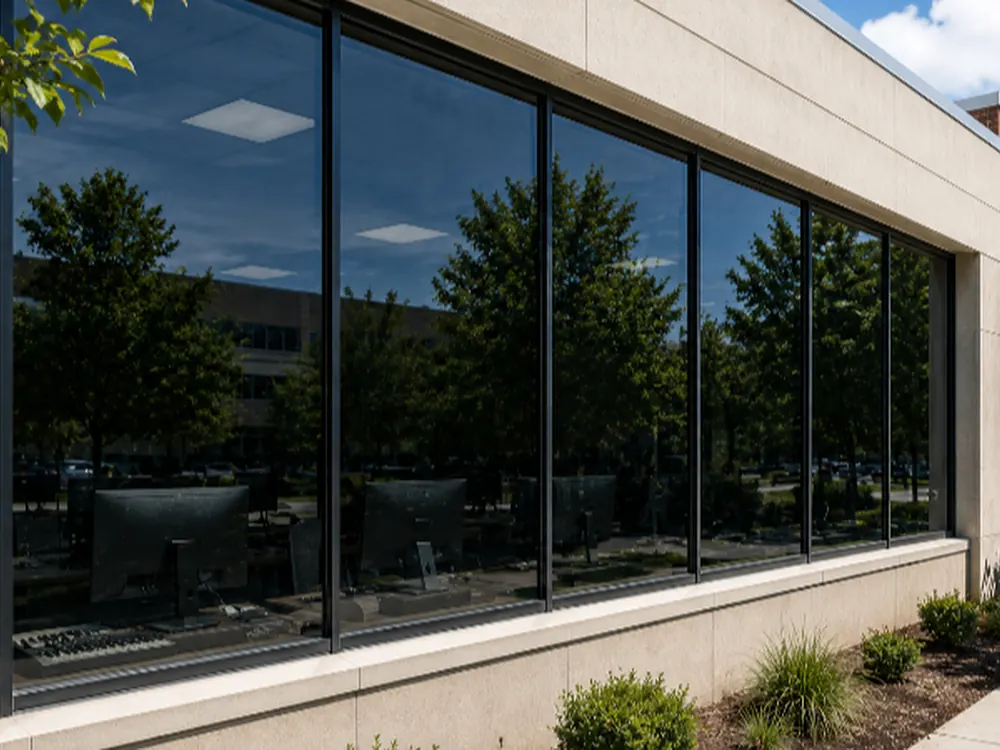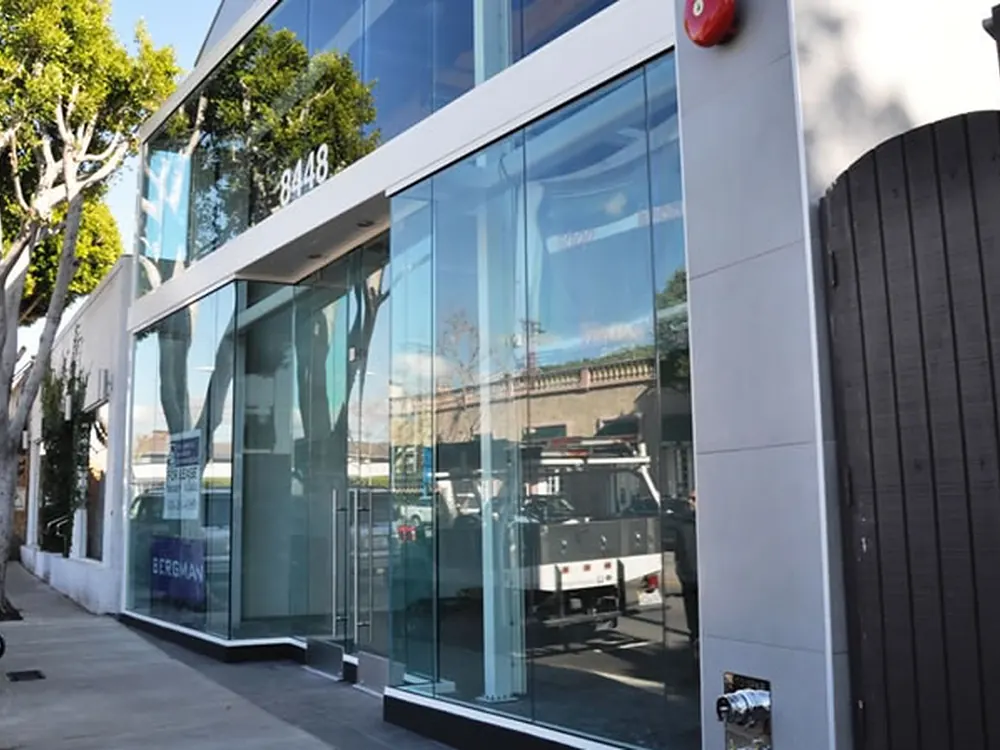
Ask an insurer what a broken storefront costs and they'll quote you the glass. Ask an owner who has been through it and you'll get a very different number, because most of what it costs never appears on a claim. That gap is the entire argument for treating the glass before anything happens to it.
The costs that don't get claimed
The pane and the glazier are the visible line items and usually the smallest. Then comes the board-up, which happens at emergency rates at an inconvenient hour, and the wait for a replacement lite — which for a large or non-standard storefront can run to weeks rather than days.
During that wait you're trading behind plywood on a plaza where customers decide from the sidewalk whether you're open. For a restaurant or a retailer that visibility is a large part of what the frontage was for, and losing it is a cost that no policy reimburses and most owners badly underestimate before it happens.
Tempered glass isn't security
Worth clearing up, because it's the most common misconception we hear. Almost every storefront lite is tempered, and owners frequently treat that as protection. Tempering is a heat treatment that changes how the glass fails — into small blunt granules rather than long blades. It's a genuine safety improvement and it's why code requires it.
But that describes what happens after an impact succeeds. A tempered pane struck hard enough doesn't crack, it disintegrates completely and instantly, leaving a wide clear opening. From the point of view of someone getting in, that's a better outcome than annealed glass, which at least leaves jagged pieces in the way.
What film actually does
Security film is a heavy, optically clear laminate bonded to the inside face. Hit hard enough the pane still breaks — nothing makes glass unbreakable — but the fragments stay stuck to the laminate. What's left is a cracked, sagging sheet still sitting in its opening.
An entry planned to take three seconds now takes repeated loud swings at a pane that keeps refusing to open, on a street with cameras and passing traffic. Most attempts are abandoned. And critically, even a failed attempt frequently leaves the glass in the frame — so you're not boarded up the next morning.
- Daylight applied — the film finishes at the visible edge. Fine for holding shards, weakest under attack.
- Edge-to-edge — the film carries under the glazing bead, giving it more to hold onto.
- Wet-glazed — a bead of structural silicone ties film to frame. This is the genuine standard.
- Mechanically attached — an aluminium batten clamps the system down, used where blast is the concern.
Attachment method, not film thickness, is the line item to compare between bids. Two quotes naming the same 8mil product can be doing fundamentally different things.
Don't forget the display cases
For jewellery, gold, and any retailer holding high-value stock, the frontage is only half the problem. Interior display cases are frequently ordinary glass with a simple lock, and a crew that gets through the door has a much easier target waiting inside.
Treating the cases is inexpensive relative to the frontage and often matters more, because it protects the thing actually worth stealing. It's the part most quotes leave out and the part we'd usually do first.
Scope it honestly
For most independent businesses here the right scope is smaller than what tends to get quoted. It's the door glass and sidelights, the panes not overlooked from the street or the plaza, and the display cases — not every lite in the frontage.
If the same glass also gets tagged or etched, anti-graffiti film handles the vandalism side of the same panes and is worth combining into one visit. Book a walkthrough and we'll tell you which openings are genuinely exposed and which need nothing at all.